

how-to
How to Plan Sustainable Luxury Event Decor
Last Updated: October 31, 2026
Quick Summary
Sustainable luxury event decor means building a polished, high-end look with rented, reusable, natural and low-impact materials instead of single-use pieces bought new for one night. The biggest gains come from renting large pieces, choosing natural or recyclable materials over plastic, and reusing signage, linens and structural pieces across events.
- Rent large pieces instead of buying them new for the largest reduction in impact.
- Choose linen, cotton, wood, bamboo, rattan, glass and paper over synthetic or plastic alternatives.
- Potted plants and greenery can move to a home, office or garden after the event.
- Ask every vendor where materials come from and what happens to each piece after the event.
- Assign one person to own the breakdown or the post-event plan usually falls apart.
Table of Contents
- Why Sustainable Luxury Event Decor Belongs Together
- Eco-Friendly Event Decor: What Actually Lowers Impact
- Reusable Event Decorations: Rent Instead of Buy
- Sustainable Event Materials: A Sourcing Checklist
- Event Rental Decor: Where It Pays Off and Where It Doesn't
- Reducing Event Waste Without Losing the Wow Factor
- After the Last Dance: Reuse, Donation, and Disposal
- Book a Photo Booth That Fits Your Sustainable Plan
- Frequently Asked Questions
Why Sustainable Luxury Event Decor Belongs Together
The old assumption was that a high-end event had to look expensive and cost the earth. That assumption is fading fast. Sustainable luxury event decor is the practice of building a polished, high-end look using rented, reusable, natural, and low-impact materials rather than single-use pieces bought new for one night.
The two goals push the same direction: fewer disposable pieces, better materials, and a design that still photographs beautifully.
Eco-Friendly Event Decor: What Actually Lowers Impact
Eco-friendly event decor is decor chosen to cut waste and resource use across the whole event, not just at the end of the night. The biggest gains come from three moves: renting instead of buying, choosing materials that break down or recycle, and reusing what you already have.
Here is the practical order of impact, from biggest to smallest:
- Rent large pieces instead of buying them new
- Choose natural or recyclable materials over plastic
- Reuse signage, linens, and structural pieces across events
Recyclable and Biodegradable Materials That Still Look Refined
The materials question trips people up because "biodegradable" often sounds like "burlap and cardboard." It does not have to.
Refined low-impact materials include:
- Linen and cotton table linens over synthetic blends
- Wood, bamboo, and rattan for structural pieces and chairs
- Glass for tableware and candle holders instead of plastic
A common mistake is buying "eco" pieces that are technically recyclable but never actually get recycled. Check with your local waste hauler about what they accept before you count on it.
Live Plants, Greenery, and Seasonal Flowers
Live plants and greenery give you the lush, expensive look without the plastic.
Potted plants, ferns, and small trees work as centerpieces and entrance pieces, then move to a home, office, or garden afterward.
Seasonal flowers cut down on the energy and shipping tied to out-of-season blooms.
The article ranks the moves that cut impact most, from biggest gain to smallest.
| Priority | Move |
|---|---|
| Biggest gain | Rent large pieces instead of buying them new |
| Next | Choose natural or recyclable materials over plastic |
| Next | Reuse signage, linens, and structural pieces across events |
| Next | Cut single-use items at the table and the bar |
| Smallest | Plan the end-of-night fate of every piece before you buy it |
Reusable Event Decorations: Rent Instead of Buy
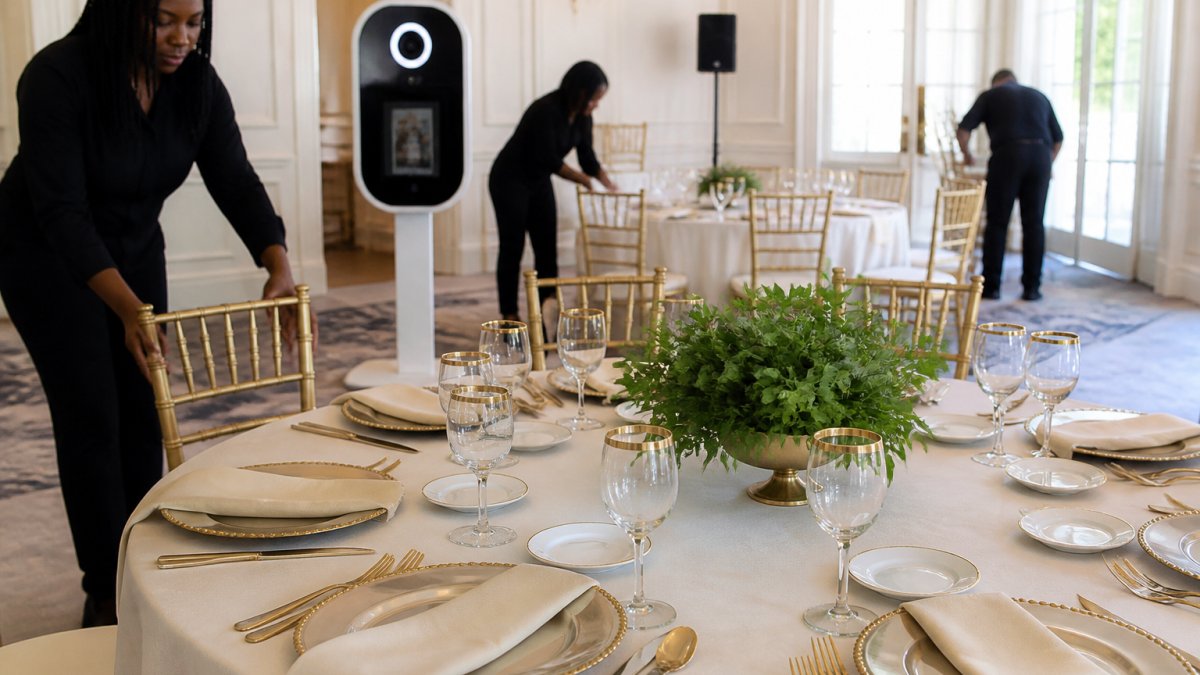
Reusable event decorations are pieces designed to be used again, either by you or by a rental company. Renting them is usually the lowest-waste option because the same chair, arch, or candle holder serves dozens of events instead of one.
The Reuse Math
The case for renting rests on uses per piece. A chair rented for one event may serve dozens over its life; a chair bought for one event typically serves one. The same logic applies to arches, candle holders, chargers, and linens, the more events a piece serves, the more its manufacturing footprint is spread across uses.
Small, highly custom, or theme-specific pieces are the exception. They rarely get reused by anyone else, so the reuse ratio stays near one no matter who owns them.
Rental Pieces That Pay Off Most
- Chairs, tables, and lounge furniture
- Glassware, flatware, and chargers
- Candle holders and lanterns
The Luxury Quality Bar for Rentals
Renting only lowers impact if the pieces are good enough to be reused and refined enough to carry a high-end look. When you evaluate a rental inventory, check:
- Condition, solid joints, clean finishes, and no chips or cracks that signal a piece near retirement.
- Weight and finish, heavier glass, real metal flatware, and well-finished wood read as premium at the table.
- Consistency, matching sets and uniform finishes keep a large room looking intentional.
Return, Inspection, and Damage Terms
Renting shifts the end-of-life burden to the rental company, but it also comes with terms you should understand before the event:
- Return windows, know when pieces must be back and whether pickup is included.
- Inspection process, ask how damage is assessed and by whom.
- Damage and loss fees, these are normal; confirm the schedule in advance.
- Delivery and setup, confirm whether these are included or billed separately, since they can shift the math.
Sustainable Event Materials: A Sourcing Checklist
Sustainable event materials are the physical inputs of your design: fabrics, woods, glass, plants, paper, and lighting. Sourcing them well starts with asking better questions before you sign anything, then verifying the answers instead of accepting a green label at face value.
Compare Options by Lifecycle, Not by Label
"Eco-friendly" is a marketing phrase, not a specification. A more useful approach is to score each candidate material on five lifecycle factors and let the scores drive the decision:
- Reuse potential, how many events can this piece realistically serve before it fails? A solid wood arch or glass charger may serve dozens; a printed foam-core backdrop usually serves one.
- Transport footprint, heavy stone, oversized installations, and pieces shipped long distances carry a cost a local, lighter alternative may avoid.
- Material sourcing, is the wood certified, the linen natural, the glass recyclable, the plant grown locally? Ask for the source, not the slogan.
- Energy use in service, LED fixtures and battery-free candles draw far less than incandescent or paraffin equivalents over an evening.
A simple pattern many planners use: rank each option high, medium, or low on all five factors, then favor the option that wins on reuse and end-of-life, since those drive the largest real-world difference.
Luxury-Specific Quality Standards
A premium finish and a low-impact material set are not in conflict, but only if you hold the materials to a quality bar. Look for:
- Craftsmanship over novelty, joinery, weight, and finish on wood and metal pieces signal whether they will survive repeated rental use.
- Durable natural fabrics, heavyweight linen and cotton draping holds a crisp line and outlasts thin synthetic blends that pill and tear.
- Real glass and metal tableware, these read as luxury at the table and are genuinely reusable, unlike disposable look-alikes.
- Locally grown or seasonal botanicals, fresher stems, better scent, and a shorter supply chain than out-of-season imports.
The goal is to avoid disposable luxury: pieces that look expensive for one night and cannot be used again.
Questions to Ask Every Vendor Before You Sign
Use this checklist with every rental company, florist, and supplier, and ask for answers in writing where you can:
- Where do these materials come from, and can you tell me the source?
- Are these pieces rented and reused, or bought new for my event?
- How many times has this piece been rented, and how is it maintained between events?
- What happens to this piece after my event ends, resale, donation, compost, or landfill?
That last question matters more than people expect. Damage fees are normal in rentals, so know the terms before the event, not after.
How to Spot Greenwashing
A few red flags are worth watching for:
- Vague claims, "eco-friendly" or "green" with no material, source, or disposal detail behind it.
- Recyclable but not recycled, a piece labeled recyclable that your local hauler will not actually accept.
- One-time "sustainable" props, items marketed as eco that are designed for a single use.
- No end-of-life answer, a vendor who cannot say what happens to the piece after the event.
When a claim matters to your design, ask for the specific material and the specific disposal path. A vendor who can answer clearly is usually the one worth booking.
Event Rental Decor: Where It Pays Off and Where It Doesn't
Where renting wins:
- Chairs, tables, and lounge furniture
- Large arches and backdrops
- Glassware and tableware for big guest counts
- Lighting fixtures and structural pieces
Where renting can cost more than it saves:
- Small custom pieces tied to one theme
- Items with tight delivery windows and high damage risk
- Very short guest lists where delivery fees outweigh the benefit
The trade-off is real. Renting usually wins on waste and often on cost, but delivery, setup, and damage terms can shift the math. Get the full quote, not the per-piece rate.
Reducing Event Waste Without Losing the Wow Factor
Reducing event waste comes down to planning the end of every piece before the event starts. The wow factor survives because guests notice the look and the details, not the disposal plan behind them.
Lighting, Tableware, and the Details Guests Notice
- Switch to LED lighting for lower energy use (Saving American Families and Businesses Money through Lighting Efficiency)
- Use glass and real flatware over disposable plastic
- Choose reusable linens over single-use covers
- Set shared platters instead of individually wrapped portions
A common mistake is spending the sustainability budget on visible "green" labels while ignoring the disposable plates. Fix the table first. That is where the waste actually is.
After the Last Dance: Reuse, Donation, and Disposal
A simple post-event plan:
- Reuse: store rented-to-own pieces and signage for future events
- Donate: offer live plants and leftover florals to guests, schools, or care centers
- Recycle: separate paper, glass, and card per your hauler's rules
- Dispose: only what truly cannot be reused or recycled
Assign one person to own the breakdown. Without a named owner, the plan usually falls apart at midnight.
Book a Photo Booth That Fits Your Sustainable Plan
A photo booth can be a practical addition to an event. Digital sharing means no printed strips unless you want them.
At Couture & Decor Social Events LLC, our photo booth experiences are built around digital photo sharing and custom templates. You can see the full range of photo booth rentals for weddings, birthdays, and corporate events and how each setup fits a refined event.
If you are close to booking, our photo booth FAQs on booking, setup, and policies answer the practical questions on space, power, and delivery before you commit.
Frequently Asked Questions
What makes event decor sustainable?
Sustainable decor comes down to what happens before and after the event. Rentals, reusable structures, live plants, and recyclable or biodegradable materials keep items in circulation instead of sending them to a landfill after one night. The practical test is simple: ask where each piece goes when the event ends. Decor that can be rented again, donated, composted, or repurposed carries far less impact than single-use pieces built for one celebration.
How can an event look luxurious while using sustainable decor?
Luxury reads through scale, lighting, and finish, not through disposability. A room with tall greenery, warm uplighting, polished tableware, and a well-built floral arch looks expensive because the pieces are substantial and well arranged. Choosing fewer, higher-quality rentals and seasonal flowers often produces a more refined result than a room packed with single-use props. Sustainable luxury event decor works because restraint and quality photograph better than volume.
What should I ask an event rental company about sustainability?
Ask how many times a piece is typically rented before retirement, how items are cleaned and stored between events, and whether they offer reusable signage or frames instead of printed one-offs. Confirm delivery logistics so you are not paying for extra trips, and ask what happens to damaged inventory. A rental company that tracks its inventory lifecycle can usually answer these directly, which tells you more than a general green claim on a website.
How can event decor be reused after a celebration?
Plan the second life before the event. Live plants and potted greenery can go home with guests or move to a patio. Structural rentals return to the vendor. Seasonal flowers can be donated to care facilities or composted, and fabric draping can be resold or kept for future parties. Build a short disposal list into your timeline so someone owns each item at teardown, rather than deciding at midnight while the venue crew waits.

Frequently asked questions
What makes event decor sustainable?
Sustainable decor comes down to what happens before and after the event. Rentals, reusable structures, live plants, and recyclable or biodegradable materials keep items in circulation instead of sending them to a landfill after one night. The practical test is simple: ask where each piece goes when the event ends. Decor that can be rented again, donated, composted, or repurposed carries far less impact than single-use pieces built for one celebration.
How can an event look luxurious while using sustainable decor?
Luxury reads through scale, lighting, and finish, not through disposability. A room with tall greenery, warm uplighting, polished tableware, and a well-built floral arch looks expensive because the pieces are substantial and well arranged. Choosing fewer, higher-quality rentals and seasonal flowers often produces a more refined result than a room packed with single-use props. Sustainable luxury event decor works because restraint and quality photograph better than volume.
What should I ask an event rental company about sustainability?
Ask how many times a piece is typically rented before retirement, how items are cleaned and stored between events, and whether they offer reusable signage or frames instead of printed one-offs. Confirm delivery logistics so you are not paying for extra trips, and ask what happens to damaged inventory. A rental company that tracks its inventory lifecycle can usually answer these directly, which tells you more than a general green claim on a website.
How can event decor be reused after a celebration?
Plan the second life before the event. Live plants and potted greenery can go home with guests or move to a patio. Structural rentals return to the vendor. Seasonal flowers can be donated to care facilities or composted, and fabric draping can be resold or kept for future parties. Build a short disposal list into your timeline so someone owns each item at teardown, rather than deciding at midnight while the venue crew waits.