
how-to
Custom Stage Backdrop Design for Events: 2026 Guide
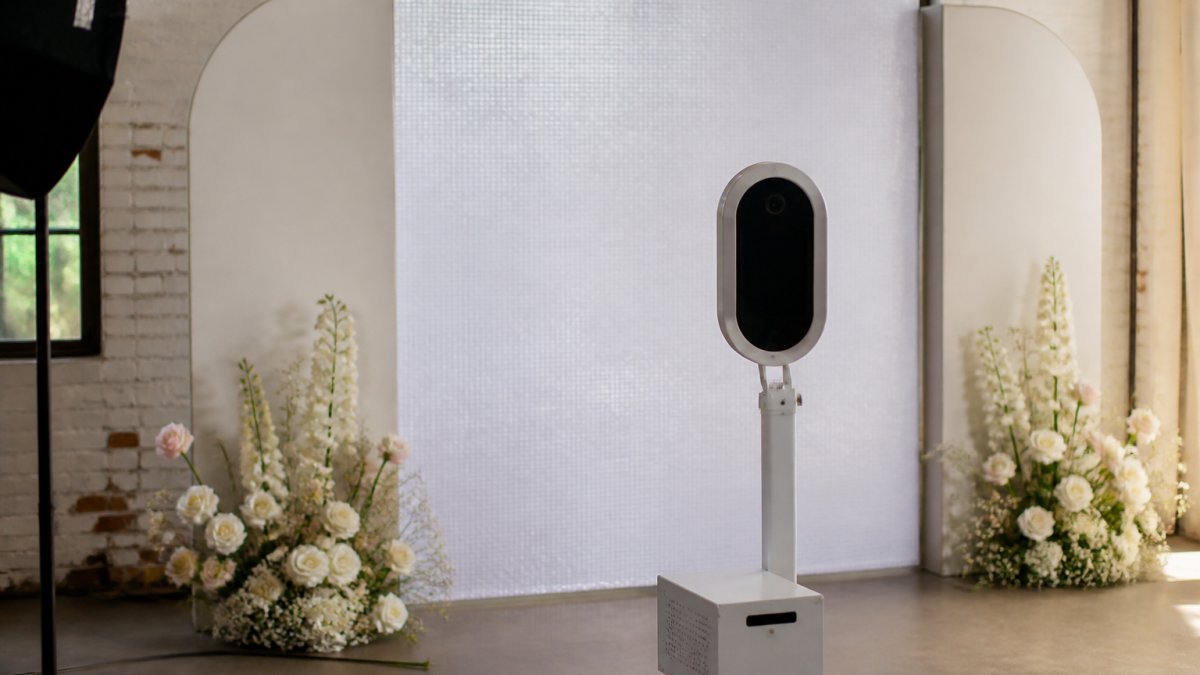
Table of Contents
- Why Custom Stage Backdrop Design Decides How Your Event Looks On Camera
- Stage Backdrop Size Guide: Matching Dimensions to Your Venue and Stage
- How to Write a Custom Backdrop Design Brief That Gets You the Right Artwork
- Materials and Printing: Fabric, Vinyl, and Full-Color Reproduction
- Event Backdrop Design Ideas That Work for Weddings, Corporate Events, and Trade Shows
- Stage Backdrop Installation: Rigging, Hardware, and Safety Checks
- Conclusion
- Frequently Asked Questions
Last Updated: October 14, 2026
Why Custom Stage Backdrop Design Decides How Your Event Looks On Camera
Custom stage backdrops for events involve sizing, printing, and installing a large-format display that sits behind a stage, speaker, or photo moment. It shapes every photo and video shot at your event.
That single panel does more work than most hosts expect. At Couture & Decor Social Events LLC, we watch guests line up in front of backdrops all night, so we know how much the finished piece matters.
This guide walks through sizing, materials, and installation.
Below, you'll find the exact steps to ensure a backdrop holds up on camera and on site.
Stage Backdrop Size Guide: Matching Dimensions to Your Venue and Stage
The right backdrop size comes from your stage width and your camera framing, not from a standard catalog number. Measure first, then order.
A backdrop that is too narrow leaves bare wall in wide shots. One that is too tall can block lighting or rigging points.
Start with these numbers:
- Stage width in feet, measured edge to edge
- Stage height from floor to ceiling or truss
- Distance from the front row of seating to the stage
- The widest camera angle you plan to use
The Sizing Formula Most Guides Skip
You can turn those four numbers into a working size with two simple rules of thumb.
Width. Add 2 to 4 feet of overhang on each side of the stage opening.
Height. Set the top of the backdrop at or just below the lowest rigging point, then let the bottom land 6 to 12 inches above the stage floor.
Camera framing. For a full-body shot, the backdrop needs to be at least as tall as the tallest subject plus about 2 feet of headroom.
Measuring the Stage, Sightlines, and Camera Framing
Walk the room before you measure anything. Stand where the photographer will stand and look at the stage.
Check what sits behind and beside your backdrop. A window, a fire exit sign, or a bright hallway can ruin a clean shot.
Then measure:
- From the back wall to the front edge of the stage
- From the stage floor to the lowest rigging point
- From the center of the stage to each side wall
Sightlines matter for seated guests too. A backdrop that is too low disappears behind heads in the back rows.
If the stage has a video wall or projection screen, treat it as a fixed element.
Common Sizing Mistakes That Force Last-Minute Rebuilds
The most common mistake is ordering a backdrop before measuring the venue. Rooms rarely match the photos on a venue's website.
Other repeat offenders:
- Forgetting ceiling height, then finding the truss sits lower than expected
- Ignoring the stage riser height, which shifts the visual center
- Skipping a walk-through with the venue's event contact
- Measuring the room while it is set for a different layout, then finding the stage moved
A tape measure and twenty minutes prevent all of it.
How to Write a Custom Backdrop Design Brief That Gets You the Right Artwork
A custom backdrop brief is a one-page document that outlines specifications for what to build. It covers files, colors, text, and layout zones.
Most reprints trace back to a vague brief. The client approves a rough mockup, and the final print misses the mark.
What to Include: Logo Files, Tagline, Colors, and Layout Zones
Keep the brief short but complete. Include these items:
- Vector logo files, not screenshots or JPEGs
- Exact brand colors with hex codes
- Tagline or event name, spelled out and checked twice
- Layout zones that mark where people will stand
- A note on whether the backdrop appears in photos or only on stage
Layout zones are the part most briefs skip. Mark the lower center area as a "keep clear" zone if guests or speakers will stand there.
Send the brief as a single PDF. Designers work faster when everything sits in one file.
Materials and Printing: Fabric, Vinyl, and Full-Color Reproduction
Fabric and vinyl are the two main choices for event backdrops, and each fits different rooms. Fabric drapes well indoors. Vinyl handles weather and rough handling.
Fabric backdrops use dye-sublimation printing, which pushes color into the cloth rather than sitting on top of it.
Vinyl banners print with full-color methods that hold up outdoors. They resist tearing and wipe clean, which matters at trade shows and media events.
| Material | Best For | Key Trait | Watch Out For |
|---|---|---|---|
| Printed fabric | Indoor stages, photography | Wrinkle-resistant, low glare | Needs careful packing |
| Vinyl banner | Outdoor use, trade shows | Durable, weather-ready | Can reflect stage lights |
Color reproduction depends on the file, not just the printer.
For more on large-format printing standards, see the American National Standards Institute overview of graphic technology standards.
Event Backdrop Design Ideas That Work for Weddings, Corporate Events, and Trade Shows
The best backdrop ideas start with the event type. A wedding backdrop and a trade show banner solve different problems.
For weddings, couples often want a soft, textured look.
For corporate events, brand identity leads. A company logo, tagline, and brand colors on a large-format display turn a plain stage into a branded environment.
For trade shows, the backdrop doubles as a booth wall. Durable materials and a clear logo help visitors spot the booth from across the hall.
Other formats worth knowing:
- Custom-built backdrop panels for odd-shaped stages
- Branded arch frames for entrances and photo lines
- Inflatable structures for outdoor spaces
- Photography backdrops for media events and podcast sets
Match the format to the room, then match the artwork to the audience.
Stage Backdrop Installation: Rigging, Hardware, and Safety Checks
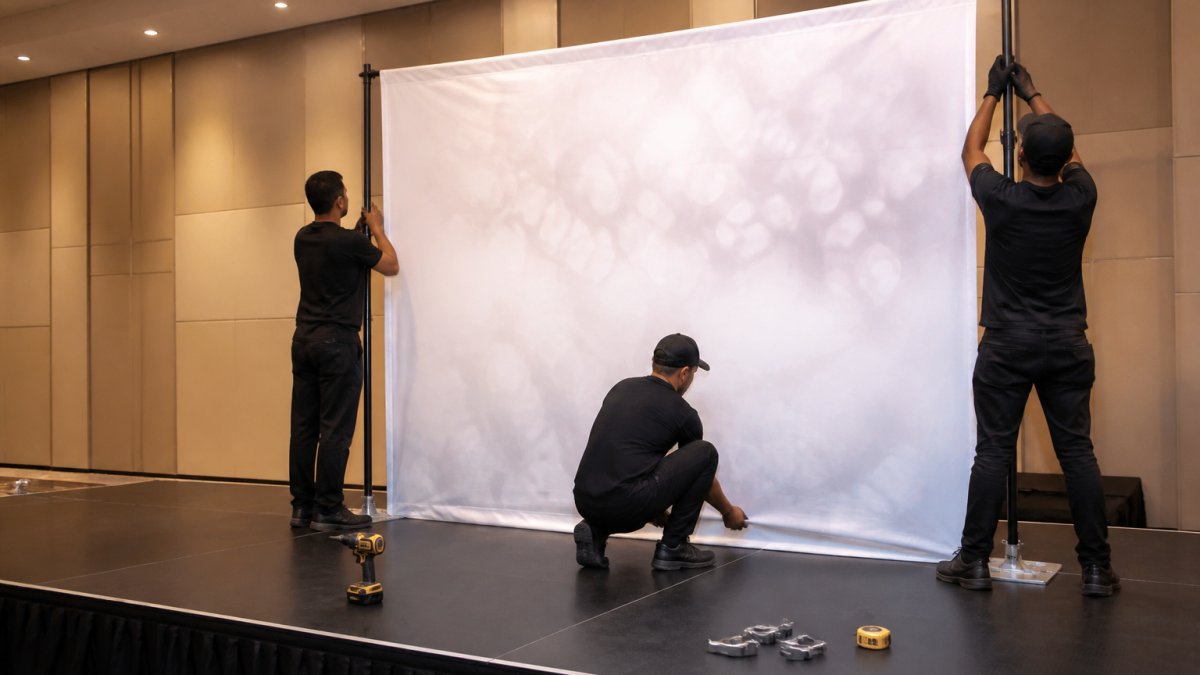
Stage backdrop installation is the step where good design meets real hardware. Most backdrops hang from a frame, a truss, or a pipe with the right clamps and straps.
Attachment Methods and What Each One Needs
There are three common ways to hang a backdrop, and each has its own hardware and constraints.
- Pipe and drape. A telescoping upright and crossbar system, usually with a slip-fit base plate. Fast to set up, but the crossbar has a working load limit, and long spans sag in the middle without a center support.
- Truss or goalpost frame. Aluminum box truss on uprights, often used for larger stages. Heavier and more stable, but it needs more floor space and a rated base or ballast.
- Direct wall or ceiling mount. Eye bolts, cables, or track hardware anchored to the structure. This depends entirely on what the venue allows you to attach to, so get written approval before you drill or clamp anything.
For fabric, most installs use a pocket, grommets, or a sewn hook-and-loop strip along the top edge. For vinyl, grommets every 12 to 24 inches along the top and bottom are standard, with bungee or zip ties to the frame so the material can flex instead of tearing.
Load, Ballast, and Stability
A backdrop is a sail. Even indoors, HVAC airflow and door traffic push against a large panel, and an unballasted frame can tip.
Plan for ballast at the base of every freestanding frame. Water weights and sandbags are common, and the amount depends on the frame's footprint and the backdrop's surface area.
Confirm the rigging points with the venue before load-in. Ask what the structure is rated for and whether the venue requires a licensed rigger for anything hung overhead. If the answer is yes, that is not a step you can skip.
Fire Safety and Accessibility
Many venues require flame-resistant or flame-retardant materials for anything on or near a stage. Ask for the requirement in writing, and keep the material's documentation with the install kit so it can be shown on site.
Keep fire exits, sprinklers, standpipes, and accessible routes clear. A backdrop that blocks an exit path or a sprinkler head fails inspection and can shut down load-in. Follow National Fire Protection Association guidance on stage and event safety and the venue's own rules, whichever is stricter.
How the Backdrop Behaves Under Stage Lighting and in Photos
Install decisions affect how the backdrop looks on camera.
- Glare. Vinyl reflects stage lights and camera flash. Fabric with a matte finish scatters light instead, which is why it photographs cleaner under spotlights.
- Color shift. Warm stage gels push whites toward yellow and blues toward green. Ask for a proof under the venue's lighting if color accuracy matters.
- Shadows. A backdrop hung too close to the performers throws hard shadows onto the panel. Pulling it back a few feet softens them.
- Moiré. Fine patterns and tight stripes can shimmer in photos and video. Larger, simpler graphics avoid it.
A basic install checklist:
- Confirm the rigging points with the venue before load-in
- Check that the frame or truss is rated for the backdrop's weight
- Keep fire exits, sprinklers, and walkways clear
- Use flame-resistant materials where the venue requires them
- Tape or weight the base so the frame cannot tip
For events where guests will pose in front of the backdrop, the same care applies. A photo booth setup, for example, depends on a clean, well-lit background behind the guests, and Couture & Decor Social Events LLC builds those photo moments around the same sizing and lighting rules covered here.
Conclusion
A backdrop that works comes from four steps: measure the room, provide a clear brief, pick the right material, and plan the install. Skip any one of them and the gaps show up on camera.
Start with the venue walk-through and the measurements, since every later decision depends on them. Then provide one complete brief with files, colors, and layout zones.
Get those basics right, and the backdrop does its job: it makes the stage, the speakers, and the photos look intentional.
Frequently Asked Questions
How do you design a custom stage backdrop for an event?
Start with the venue: measure the stage width and height, note sightlines, and confirm what the space allows for hanging. Provide a short brief covering your logo, tagline, color codes, and where guests or cameras will sit. Choose a material and printing method based on indoor or outdoor use, then review a digital proof before production. Build in time for a test print and a full setup rehearsal so the stage backdrop is confirmed before event day.
What size should an event stage backdrop be?
There is no single correct size. A common approach is to make the backdrop wider than the speaking or performance area so it fills the camera frame, and tall enough to sit behind the tallest person on stage with headroom to spare. For a step-and-repeat or photography backdrop, confirm the width against the widest group likely to pose. Always measure the actual stage and venue before ordering, since ceiling height and rigging points limit how large a backdrop can go.
Can a custom stage backdrop be used outdoors?
Yes, but outdoor use changes the specification. Wind is the main factor, so freestanding frames need ballast or anchoring, and lightweight fabric can act like a sail. Choose a heavier, wrinkle-resistant material, add reinforced hems and grommets, and plan a fallback indoor location if weather turns. Check the venue's rules on staking, weights, and setup windows before you commit to an outdoor stage backdrop.
What should you include in a stage backdrop design brief?
A useful brief covers the event name and date, venue and stage dimensions, logo files in vector format, brand colors as hex or Pantone references, any tagline or sponsor logos, and where each element should sit. Add camera and photography notes, indoor or outdoor conditions, and the date artwork is needed for print. Including a simple sketch of the layout prevents most revision rounds and helps ensure the printed backdrop aligns with the rest of your event branding.
Frequently asked questions
How do you design a custom stage backdrop for an event?
Start with the venue: measure the stage width and height, note sightlines, and confirm what the space allows for hanging. Provide a short brief covering your logo, tagline, color codes, and where guests or cameras will sit. Choose a material and printing method based on indoor or outdoor use, then review a digital proof before production. Build in time for a test print and a full setup rehearsal so the stage backdrop is confirmed before event day.
What size should an event stage backdrop be?
There is no single correct size. A common approach is to make the backdrop wider than the speaking or performance area so it fills the camera frame, and tall enough to sit behind the tallest person on stage with headroom to spare. For a step-and-repeat or photography backdrop, confirm the width against the widest group likely to pose. Always measure the actual stage and venue before ordering, since ceiling height and rigging points limit how large a backdrop can go.
Can a custom stage backdrop be used outdoors?
Yes, but outdoor use changes the specification. Wind is the main factor, so freestanding frames need ballast or anchoring, and lightweight fabric can act like a sail. Choose a heavier, wrinkle-resistant material, add reinforced hems and grommets, and plan a fallback indoor location if weather turns. Check the venue's rules on staking, weights, and setup windows before you commit to an outdoor stage backdrop.
What should you include in a stage backdrop design brief?
A useful brief covers the event name and date, venue and stage dimensions, logo files in vector format, brand colors as hex or Pantone references, any tagline or sponsor logos, and where each element should sit. Add camera and photography notes, indoor or outdoor conditions, and the date artwork is needed for print. Including a simple sketch of the layout prevents most revision rounds and helps ensure the printed backdrop aligns with the rest of your event branding.